| Products/Services Used | Details | Operation |
|---|---|---|
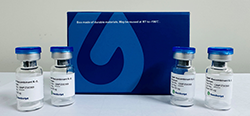
| Protein and Antibody Isolation | 37 (ZmNIR2)-Flag and ∆30 (ZmGLN1)-HA were mixed at a 1:3 molar ratio and incubated at 4 °C for 1 h. Subsequently, the anti-flag affinity resin (Genscript, L00432-10) was added to the reaction mixture. Separately, individual ∆37 (ZmNIR2)-Flag or ∆30 (ZmGLN1)-HA were incubated with anti-Flag affinity resin (Genscript) as controls. | Get A Quote |
Efficient nitrogen assimilation is important for sustainable agriculture1, yet its subcellular organization remains unknown. Here we show that plastoglobules (PGs) in the chloroplasts of mesophyll cells function as a metabolic hub that orchestrates nitrogen utilization in maize. Nitrogen-responsive dynamics of PGs represent a conserved feature across plant species. We identify two key enzymes, nitrite reductase 2 (ZmNIR2) and glutamine synthetase 1 (ZmGLN1), specifically targeted to PGs by a chloroplast transit peptide and hydrophobic region. Cryogenic electron microscopy analysis of recombinant ZmGLN1 shows a decameric complex, enabling a metabolon with ZmNIR2 for enhanced efficiency. Among two NIR and six GLN... More