Foodborne pathogenic and spoilage bacteria, particularly Gram-negative species, pose significant challenges to food safety and quality. Developing antimicrobial strategies that simultaneously ensure microbial control and product integrity is therefore of great importance. Thanatin, an antimicrobial peptide targeting the lipopolysaccharide transport (Lpt) system, has shown potent activity against Gram-negative bacteria, yet its applicability in food systems remains insufficiently explored. In this study, the antibacterial efficacy and food preservation potential of Thanatin were systematically evaluated against representative foodborne pathogens (Escherichia coli, Salmonella spp.) and spoilage bacteria (Pseudomo... More
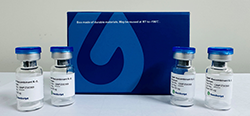
Foodborne pathogenic and spoilage bacteria, particularly Gram-negative species, pose significant challenges to food safety and quality. Developing antimicrobial strategies that simultaneously ensure microbial control and product integrity is therefore of great importance. Thanatin, an antimicrobial peptide targeting the lipopolysaccharide transport (Lpt) system, has shown potent activity against Gram-negative bacteria, yet its applicability in food systems remains insufficiently explored. In this study, the antibacterial efficacy and food preservation potential of Thanatin were systematically evaluated against representative foodborne pathogens (Escherichia coli, Salmonella spp.) and spoilage bacteria (Pseudomonas aeruginosa). Thanatin exhibited strong antibacterial activity (MIC ≤ 64 μg/mL), notable biofilm clearance (average removal rate 36.84%) and prevention effect, membrane-disruptive effects, and good cytocompatibility (mammalian cell viability >90%). In diverse food matrices (chilled pork, lettuce, salmon, water, and chicken breast), Thanatin effectively reduced both indigenous and inoculated bacterial loads, achieving up to a 4.20 log CFU/mL reduction. Shelf-life assessments further revealed that Thanatin treatment significantly delayed microbial growth and quality deterioration during 7 days of refrigerated storage (4 °C). Treated samples displayed lower total viable and coliform counts, decreased pH and TVB-N values, and improved color, texture, and water-holding capacity compared with controls. Overall, these findings highlight the dual antimicrobial and preservative potential of Thanatin, providing a promising green and targeted strategy for ensuring food safety and maintaining product quality.