| Products/Services Used | Details | Operation |
|---|---|---|
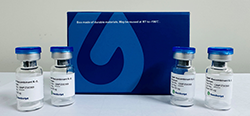
| Protein and Antibody Reagents | calculations. 2.7 Binding ELISA A non-competitive ELISA was performed to measure the affinity constant (K aff ) of WT SARS-CoV-2 Spike protein RBD (His Tag) (GenScript), and SARS-CoV-2 B.1.640.2 (IHU) Spike RBD protein (His Tag) (Sino Biological) against the hACE2-Fc protein (GenScript) [ 40 ]. Briefly, the 96-well -2 Spike protein RBD (His Tag) (GenScript), and SARS-CoV-2 B.1.640.2 (IHU) Spike RBD protein (His Tag) (Sino Biological) against the hACE2-Fc protein (GenScript) [ 40 ]. Briefly, the 96-well plates were coated with 2, and 4 g/mL hACE2-Fc Tag protein at 4 C overnight, then washed with 0.1% PBST. Then the plates | Get A Quote |
The number of SARS-CoV-2 spike Receptor Binding Domain (RBD) with multiple amino acid mutations is huge due to random mutations and combinatorial explosions, making it almost impossible to experimentally determine their binding affinities to human angiotensin-converting enzyme 2 (hACE2). Although computational prediction is an alternative way, there is still no online platform to predict the mutation effect of RBD on the hACE2 binding affinity until now. In this study, we developed a free online platform based on deep learning models, namely D3AI-Spike, for quickly predicting binding affinity between spike RBD mutants and hACE2. The models based on CNN and CNN-RNN methods have the concordance index of around 0.... More