The COVID-19 pandemic accelerated the development of monoclonal antibodies (mAb) targeting SARS-CoV-2, with IgG1-based mAbs dominating the therapeutic landscape. However, IgA the predominant immunoglobulin at mucosal surfaces represents a promising alternative for respiratory infections due to its natural role in immune exclusion and pathogen neutralization. Here, we engineered IgA-Fc fusion proteins conjugated with nanobodies (V H H-IgA) derived from immunized llamas to neutralize SARS-CoV-2 variants. Phage display libraries generated from Delta and Omicron receptor-binding domain (RBD) immunized llamas yielded 248 unique V H H sequences, with fifty candidates selected based on binding reactivity and neutraliz... More
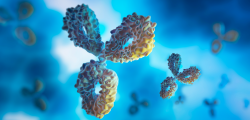
The COVID-19 pandemic accelerated the development of monoclonal antibodies (mAb) targeting SARS-CoV-2, with IgG1-based mAbs dominating the therapeutic landscape. However, IgA the predominant immunoglobulin at mucosal surfaces represents a promising alternative for respiratory infections due to its natural role in immune exclusion and pathogen neutralization. Here, we engineered IgA-Fc fusion proteins conjugated with nanobodies (V H H-IgA) derived from immunized llamas to neutralize SARS-CoV-2 variants. Phage display libraries generated from Delta and Omicron receptor-binding domain (RBD) immunized llamas yielded 248 unique V H H sequences, with fifty candidates selected based on binding reactivity and neutralization potency. V H H-IgA fusion proteins were expressed in Expi293 cells, and top candidates exhibited high binding affinities (EC 50 < 0.2 nM) and potent neutralization (IC 50 < 40 pM) against multiple SARS-CoV-2 variants, including Omicron Ba.1 and XBB. Structural modeling predicted that the leading V H H-IgA candidates 2D4, 1C2, and 2D10 adopt distinct binding conformations to accommodate amino acid sequence variations on the Omicron RBD domain. In vitro assays demonstrated that 2D4, 1C2, and 2D10 neutralized authentic Omicron variants of concern, with 2D4 exhibiting the broadest activity. In vivo , intranasal administration of 2D4 V H H-IgA significantly reduced SARS-CoV-2 XBB viral loads in the lungs of infected K18-hACE2 mice. These findings highlight the therapeutic potential of IgA-based nanobody fusion proteins as mucosal antivirals against SARS-CoV-2. Our work positions V H H-IgA fusion proteins as a platform for developing next-generation biologics to combat respiratory pathogens at mucosal surfaces.