



























目录产品 » 蛋白分离纯化 » 蛋白纯化介质 » Monofinity A Resin

Monofinity A Resin

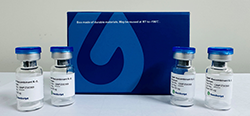
The alkali tolerant protein A Resin (Monofinity A Resin, Cat. No. L00433) is made of recombinant protein A as ligand, which not only keeps the specific binding capacity to Fc region of immunoglobulin molecules, but also tolerates alkaline conditions. It can withstand rigorous Cleaning-in-place (CIP) procedures with 0.1 to 0.5 M NaOH. As a high quality antibody purification resin, it can be used for large scale antibody purification, and meet the purification requirement of industry-scale customers.
¥4032 在线订购包邮(港澳台除外)
L00433-5ML

咨询产品问题
Product description Protein A affinity chromatography resin is the most commonly use method for isolation and purification of IgG. Protein A is a cell wall component found in several strains of Staphylococcus aureus. It has five high affinity binding sites capable of binding specifically to the Fc region of immunoglobulin molecules from several species. Covalently immobilized Protein A matrices have been extensively used to purify IgG from several species of mammals. Monofinity A Resin can also be used for immunoprecipitation of proteins, protein complexes or antigens. The alkali tolerant protein A Resin (Monofinity A Resin, Cat. No. L00433) is made of recombinant protein A as ligand, which not only keeps the specific binding capacity to Fc region of immunoglobulin molecules, but also tolerates alkaline conditions. It can withstand rigorous Cleaning-in-place (CIP) procedures with 0.1 to 0.5 M NaOH. As a high quality antibody purification resin, it can be used for large scale antibody purification, and meet the purification requirement of industry-scale customers.
Key Features ● High IgG binding capacity ● Each milliliter of the resin can bind over 30 mg human IgG (h IgG) ● Good pressure resistance ● Made of rigid base matrix, the resin can withstand a pressure up to 0.3 MPa ● Low ligand leakage during elution ● The leakage is less than 15 ng ligand (protein A)/ mg purified Ig G. ● Enhanced alkali stability ● There is no significant decrease of binding capacity after CIP with 0.1M NaOH for 200 cycles. ● When using 0.5M NaOH for 100 cycles, the resin can still remain 80% of its binding capacity.
返回

Formulation 50% slurry in 20% ethanol
Matrix Highly-crosslinked 4% beaded agarose
Average Particle Size 90 μm (45-165 μm)
Coupling Chemistry Epoxy activated
Ligand Alkali-Tolerant Protein A
Binding Capacity > 30 g human IgG/L settled resin
Reagents Compatibility
Detergents Reductants Chelates Others
1% NP-40
1% Triton X-100
0.1% SDS
2 mM β-mercaptoethanol 20mM EDTA 1mM PMSF
5% glycerol
Application Laboratory scale antibody purification
Bioprocess scale antibody purification
Storage Store at 2°C to 8°C. Do not freeze.
返回

Monofinity A Resin

»

Monofinity A Resin

»

<
>

For research and manufacturing use. Direct human use, including taking orally and injection are forbidden.


Yvonne J. Rosenberg; Xiaoming Jiang; Jonathan P. Lees; Lori A. Urban; Lingjun Mao; Markus Sack, et al. Enhanced HIV SOSIP Envelope yields in plants through transient co-expression of peptidyl-prolyl isomerase B and calreticulin chaperones and ER targeting. Scientific REPORTS. (2024-10)
AgadjanyanMichael G, et al. Humanized monoclonal antibody armanezumab specific to N-terminus of pathological tau: characterization and therapeutic potency. Mol Neurodegener. (2017)
Xu K, et al. Human VE-Cadherin Fusion Protein as an Artificial Extracellular Matrix Enhancing the Proliferation and Differentiation Functions of Endothelial Cell. Biomacromolecules. (2016-03)