| Products/Services Used | Details | Operation |
|---|---|---|
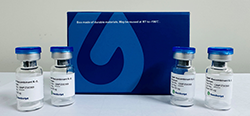
| Peptide Synthesis | Lyophilized peptides (Genscript) were dissolved in 1 M HEPES·NaOH pH 7.5 at RT, 10 mM tris(2-carboxyethyl)phosphine (TCEP) and 1 mM EDTA to a final concentration of 10 mM, snap-frozen as single-use aliquots and stored at −80 °C. | Get A Quote |
Most proteins imported into peroxisomes use a carboxy-terminal PTS1 signal, which is recognized by soluble receptors that transport the cargo through a nuclear pore-like conduit in the peroxisomal membrane formed by the tyrosine and glycine-rich YG domain of PEX13. The receptors then return to the cytosol through a separate retrotranslocon. Some peroxisomal proteins instead use an amino-terminal PTS2 signal that is recognized by an adaptor called PEX7, but how they are imported is poorly understood. Here we show that PTS2 cargo is moved through the YG phase by PEX7 bound to a receptor. After cargo release inside peroxisomes, PEX7 returns to the cytosol by moving back on its own through the YG phase. The chapero... More