






























TNFSF15, Fc Chimera, Cynomolgus/Rhesus macaque
| ¥3500 | |
| Z04957-100 | |
|
|
|
|
|
|
|
|
|
| ¥3500 | |
| Z04957-100 | |
|
|
|
|
|
|
|
|
|
| Species | Cynomolgus/Rhesus macaque | ||||
| Protein Construction |
|
||||
| Purity | > 95% as determined by BisTris PAGE | ||||
| Endotoxin Level | Less than 1EU per μg by the LAL method. | ||||
| Biological Activity | Measured by its binding ability in a functional ELISA. Test result was comparable to standard batch. | ||||
| Expression System | HEK293 | ||||
| Theoretical Molecular Weight | 44.82 kDa | ||||
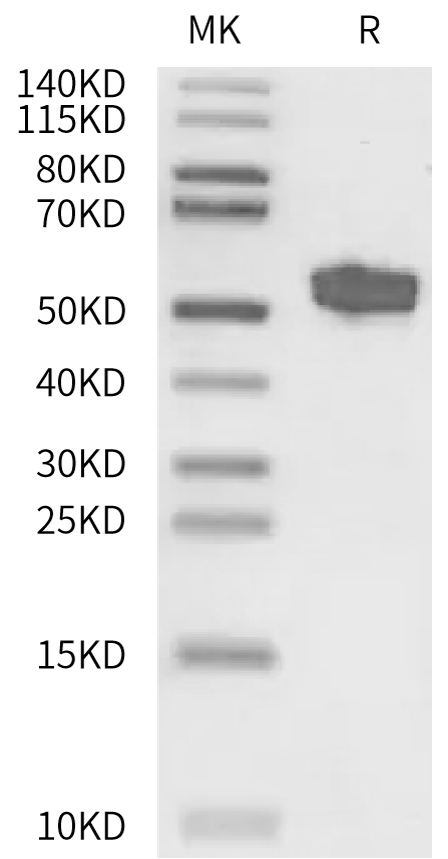
| Apparent Molecular Weight | Due to glycosylation, the protein migrates to 50-60 kDa based on Bis-Tris PAGE result. | ||||
| Formulation | Lyophilized from 0.22 μm filtered solution in PBS (pH 7.4). | ||||
| Reconstitution | Centrifuge the tube before opening. Reconstituting to a concentration more than 100 μg/ml is recommended. Dissolve the lyophilized protein in distilled water. | ||||
| Storage & Stability | Upon receiving, the product remains stable for 6 months at -20℃ or below. Upon reconstitution, the product should be stable for 3 months at -80℃. Avoid repeated freeze-thaw cycles. |
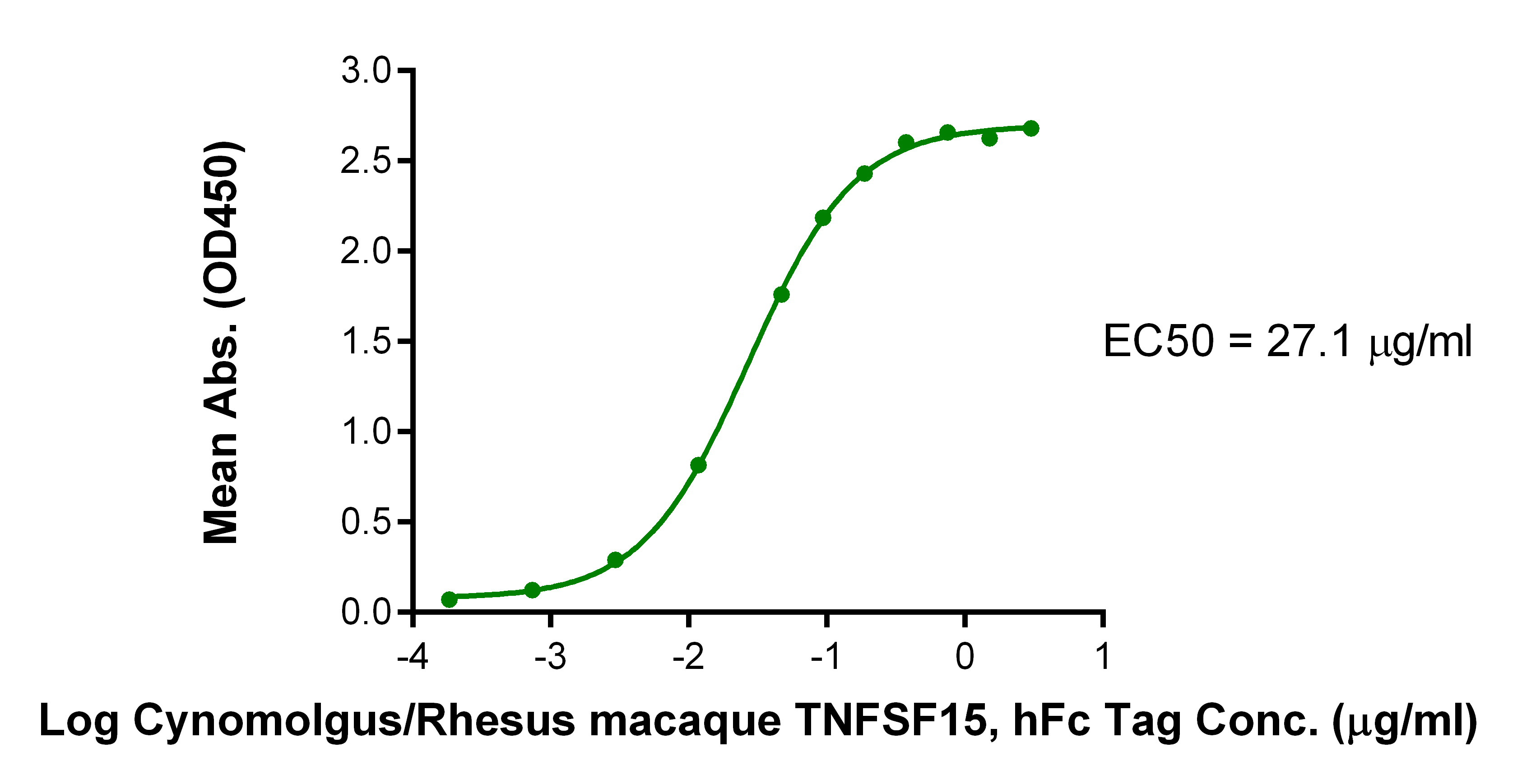
Immobilized Mouse DR3, His Tag at 5 μg/ml (100 μl/well) on the plate. Dose response curve for TNFSF15, Fc Chimera, Cynomolgus/Rhesus macaque, hFc Tag with the EC50 of 27.1ng/ml determined by ELISA. »
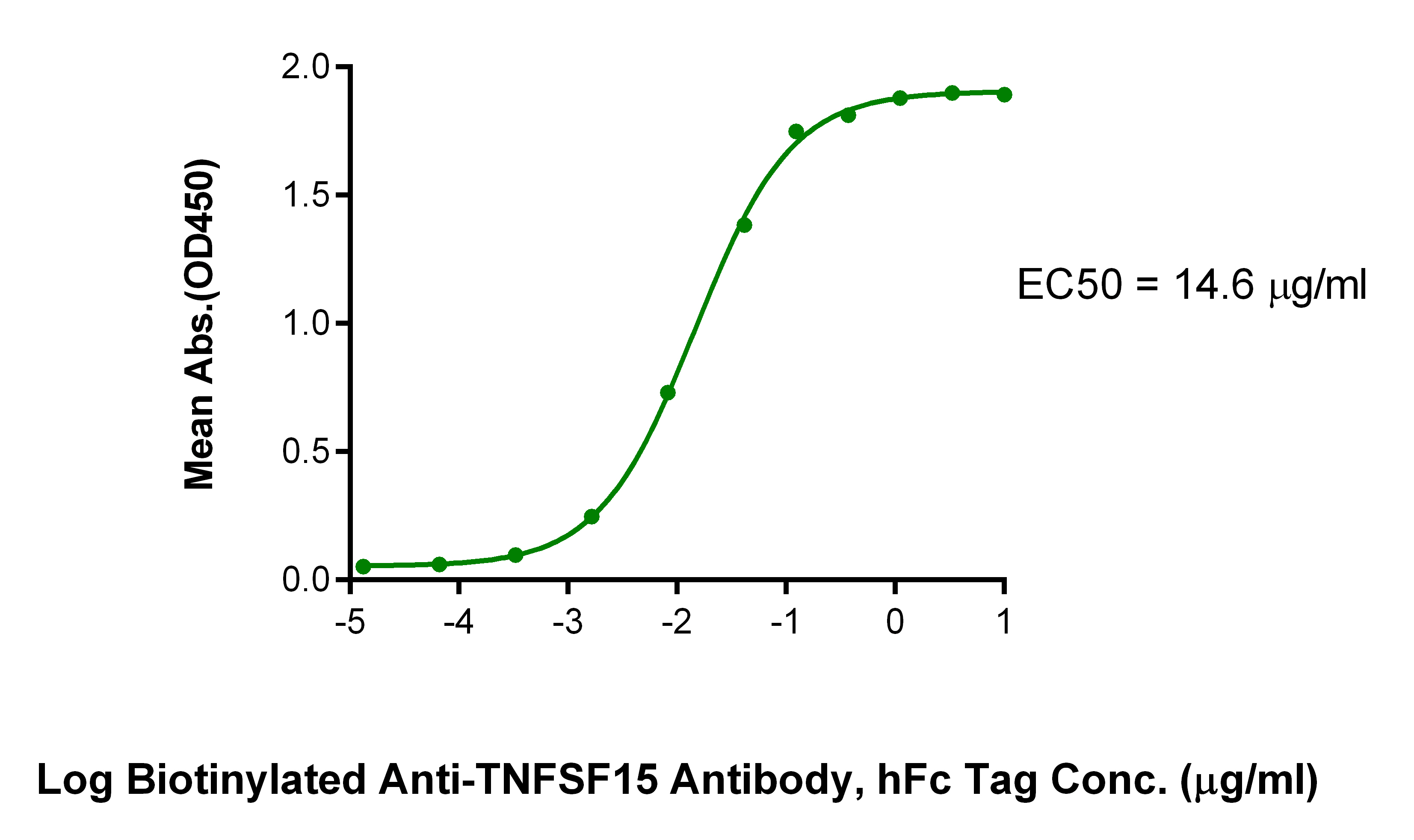
Immobilized TNFSF15, Fc Chimera, Cynomolgus/Rhesus macaque, hFc Tag at 0.5 μg/ml (100 μl/well) on the plate. Dose response curve for Biotinylated Anti-TNFSF15 Antibody, hFc Tag with the EC50 of 14.6ng/ml determined by ELISA. »
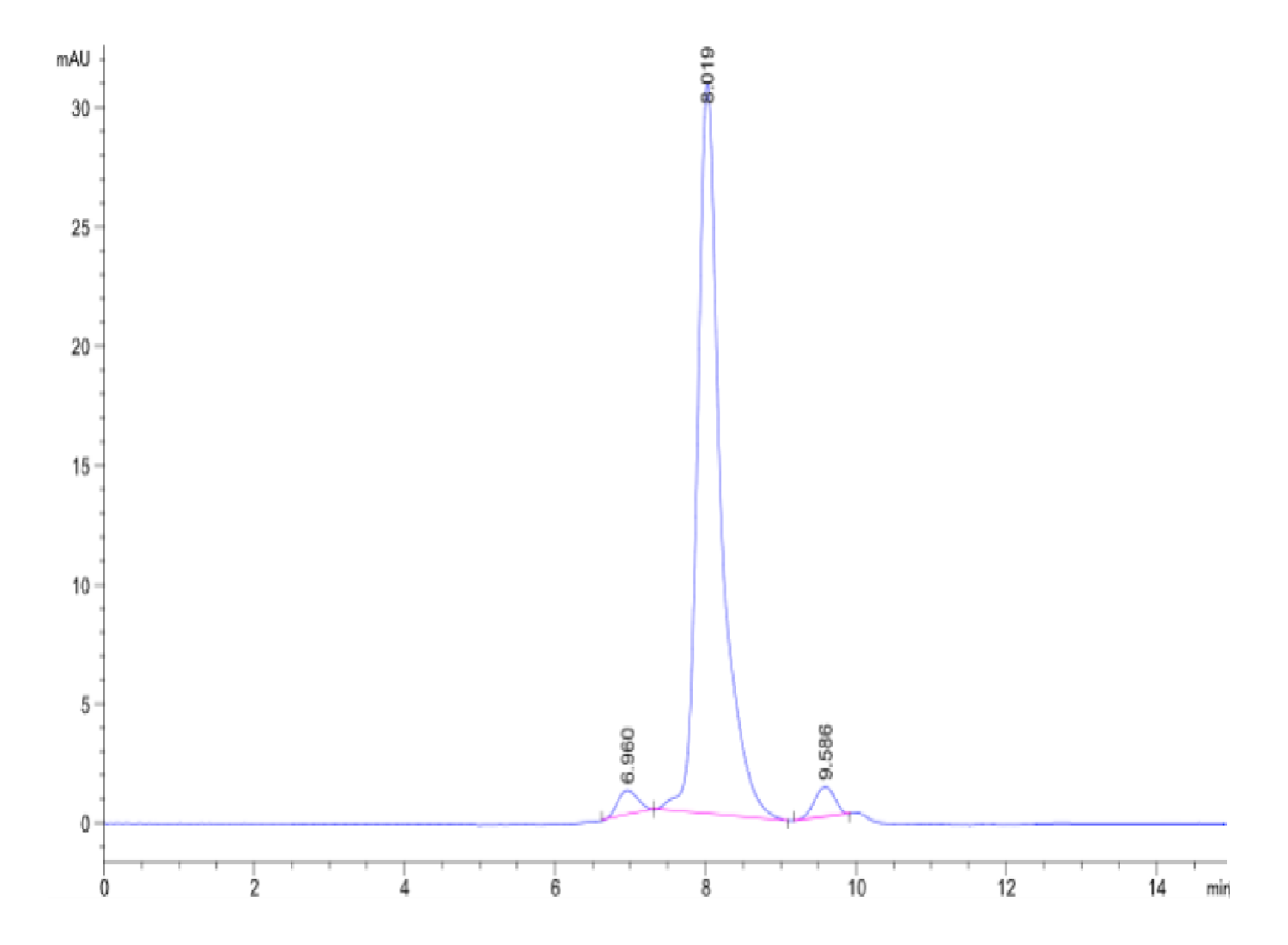
The purity of TNFSF15, Fc Chimera, Cynomolgus/Rhesus macaque is greater than 90% as determined by SEC-HPLC. »
TNFSF15, Fc Chimera, Cynomolgus/Rhesus macaque on Bis-Tris PAGE under reduced condition. The purity is greater than 95%. »
| Target Background | TNF superfamily member 15 (TNFSF15), a cytokine largely produced by vascular endothelial cells and a specific inhibitor of the proliferation of these same cells, can inhibit VEGF-induced vascular permeability in vitro and in vivo, and that death receptor 3 (DR3), a cell surface receptor of TNFSF15, mediates TNFSF15-induced dephosphorylation of VEGFR2. |
| Synonyms | TL1A; VEGI-251; TNFSF15; TL1; VEGI; VEGI192A; TNF superfamily member 15 |
For research use only. Not intended for human or animal clinical trials, therapeutic or diagnostic use.