

































目录产品 » 蛋白分离纯化 » 蛋白分离磁珠 » Protein A/G MagBeads

Protein A/G MagBeads

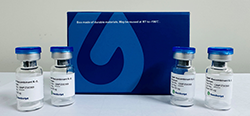
GenScript Protein A/G MagBeads are ideal for small‐ scale antibody purification and immunoprecipitation (IP) of proteins, protein complexes or other antigens.
¥1400 在线订购包邮(港澳台除外)
L00277

咨询产品问题
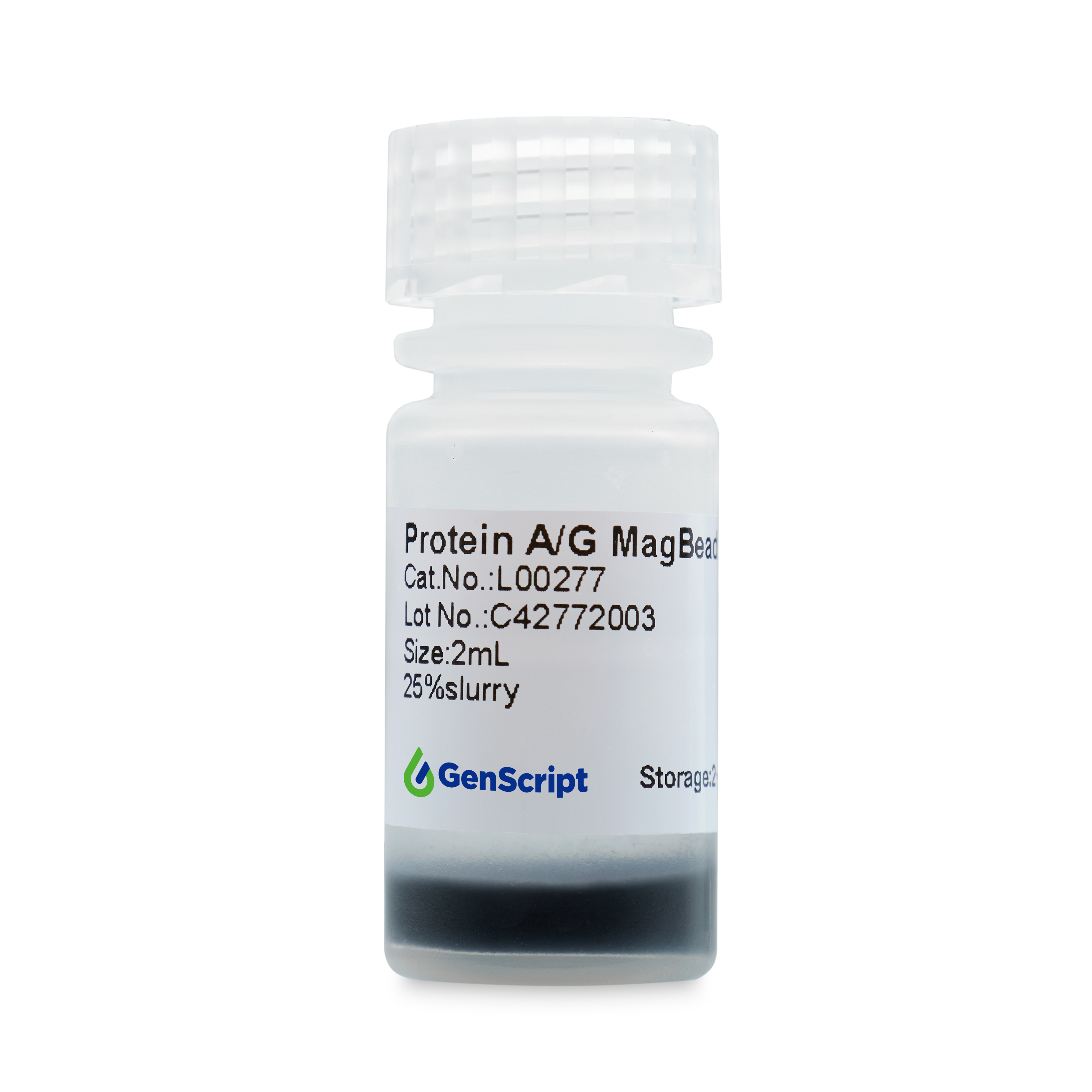
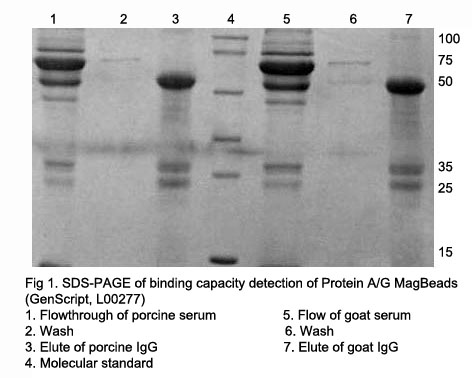
Product Description GenScript Protein A/G MagBeads are super paramagnetic beads of average 40 μm in diameter, covalently coated with recombinant Protein A/G. The beads are supplied as 25% slurry in 20% ethanol. The Protein A/G MagBeads have a binding capacity of more than 10 mg Human IgG per 1 ml settled beads (e.g. 4 ml 25% slurry).
Key Features ● Combines IgG binding sites of both Protein A and Protein G
● More universal tool to bind and purify immunoglobulins
● Magnetic separation minimizes sample loss and removes excessive steps
返回

Ligand recombinant Protein A/G
Binding Capacity more than 10 mg Human IgG per 1 ml settled beads
Matrix super paramagnetic beads
Average Particle Size 40 μm
Formulation 25% slurry in 20% ethanol
Application small-scale antibody purification and immunoprecipitation (IP) of proteins, protein complexes or other antigens
Storage Stored at 2-8°C. Do NOT freeze the product. Keep the magnetic beads in liquid suspension during storage and all handling steps. Drying will cause loss of binding capacity and result in reduced performance. Resuspend the beads well before use. Be careful to avoid bacterial/fungal contamination.
Note This product contains 20 % EtOH as a preservative. Flammable liquid and vapor. Flash point 38°C, R-10 flammable.
返回

Protein A/G MagBeads

»

Protein A/G MagBeads

»

<
>

For research and manufacturing use. Direct human use, including taking orally and injection are forbidden.


Jiaqi Tang, et al. OsWRKY53-OsGT1 Module Regulates Rice Tiller Development and Is Involved in Fine-Tuning Strigolactone Signaling. Plant Biotechnology Journal. (2026-02)
Enyang Mei, et al. OsWRKY78 regulates panicle exsertion via gibberellin signaling pathway in rice. J Integr Plant Biol. (2024-03)
Shengjie Zhang, et al. NEAT1 repression by MED12 creates chemosensitivity in p53 wild-type breast cancer cells. FEBS J. (2024-02)
Peixia Tang , et al. CRIP1 involves the pathogenesis of multiple myeloma via dual-regulation of proteasome and autophagy. EBioMedicine. (2024-02)
Jing-Yi Zhou, et al. Discovery and identification of a novel small molecule BCL-2 inhibitor that binds to the BH4 domain. Acta Pharmacol Sin. (2022-08)
Guangxin Zhao, et al. OsASHL1 and OsASHL2, two members of the COMPASS-like complex, control floral transition and plant development in rice. J Genet Genomics. (2022-03)
Jingru Guo, et al. Fine-tuning of pathogenesis-related protein 1 (PR1) activity by the melatonin biosynthetic enzyme ASMT2 in defense response to cassava bacterial blight. J Pineal Res. (2021-12)
Caroline Jane Ross, et al. Uncovering deeply conserved motif combinations in rapidly evolving noncoding sequences. Genome Biol. (2021-01)
Ren Y, et al. Oryza sativa mediator subunit OsMED25 interacts with OsBZR1 to regulate brassinosteroid signaling and plant architecture in rice. Journal of integrative plant biology. (2020-06)
Fang Y, et al. Epigenetic dysregulation of Mdr1b in the blood-testis barrier contributes to dyszoospermia in mice exposed to cadmium. Ecotoxicol Environ Saf. (2020)
Rom A, et al. Regulation of CHD2 expression by the Chaserr long noncoding RNA gene is essential for viability. Nat Commun. (2019)
RestrepoRicardo J, et al. Binge alcohol alters PNPLA3 levels in liver through epigenetic mechanism involving histone H3 acetylation. Alcohol. (2017-05)
Wang Chao, et al. Lotus japonicus clathrin heavy Chain1 is associated with Rho-Like GTPase ROP6 and involved in nodule formation. Plant Physiol. (2015)
查看更多
返回