































| Product Introduction |
Furin, a member of the proprotein convertase (PC) family, belongs to the subtilisin superfamily of serine proteases. As an intracellular protease, Furin specifically cleaves after Arg-Xaa-Lys/Arg-Arg motifs at the C-terminus of pro-regions in various proproteins within the secretory pathway—including growth factors, receptors, extracellular matrix proteins, and other proteases—to facilitate their maturation. Additionally, many other cellular proteins, certain viral proteins, and bacterial toxins transported via the constitutive secretory pathway also rely on PC family enzymes for proteolytic processing. Furin and other PC family members share conserved structural features: . A heterogeneous ~10 kDa N-terminal prodomain. A highly conserved ~55 kDa subtilisin-like catalytic domain. A C-terminal domain with variable length and sequence. In mammalian cells, furin is localized mainly to the trans‑Golgi network and endosomal compartments, where it functions in the secretory and endocytic pathways under mildly acidic to neutral pH conditions. |
| Source | CHO |
| Tag | His-Tag |
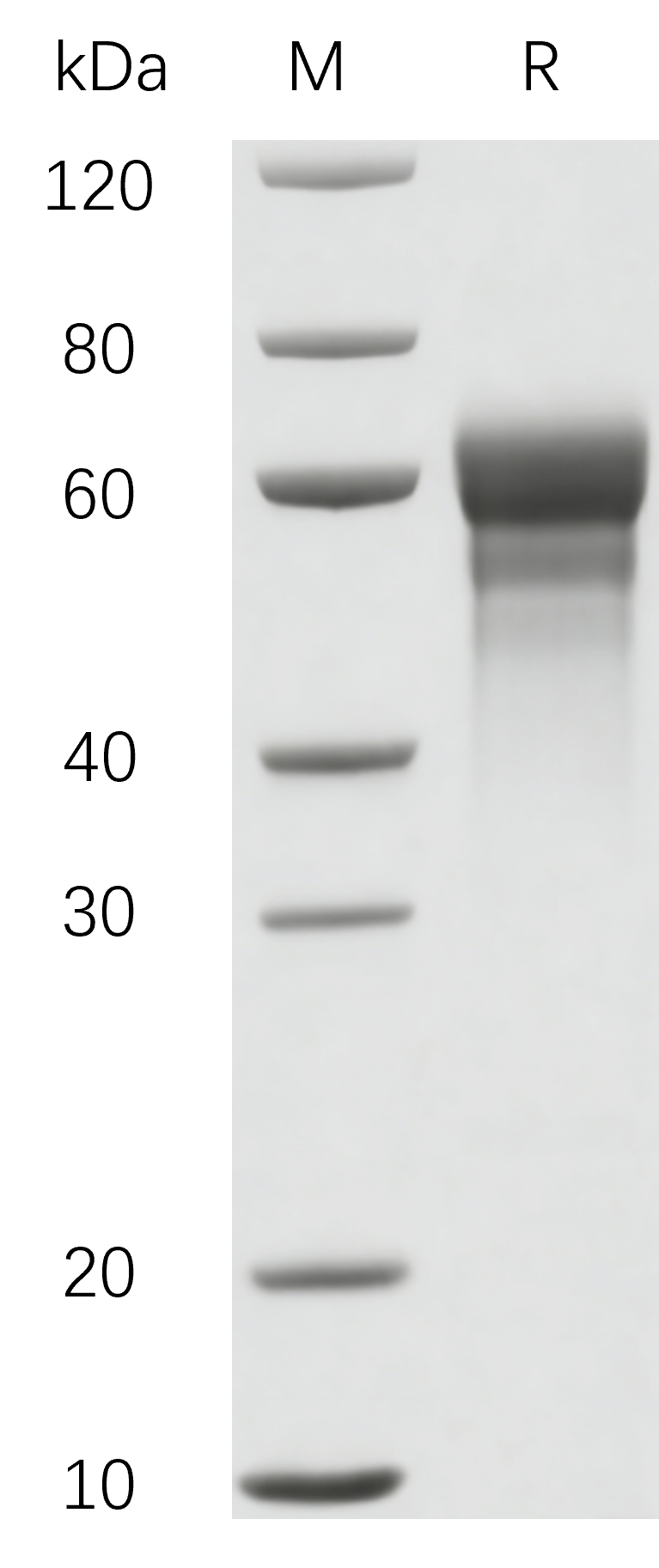
| Purity | ≥ 90% as analyzed by SDS-PAGE |
| Biological Activity | >125 U/µL |
| Unit Definition | One unit (U) of Furin activity is defined as the amount of enzyme that catalyzes the cleavage of 1 pmol of pERTKR-AMC per minute at 25°C in a reaction system containing 25 mM Tris-HCl, 1 mM CaCl₂, 0.1% (w/v) Brij-35, pH 9.0. |
| Endotoxin Level | < 1 EU/µg by the LAL method. |
| Theoretical Molecular Weight | The accurate molecular weight of this protein, as determined by mass spectrometry, is 51.5 kDa. |
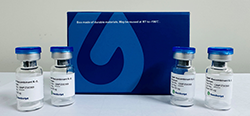
| Physical Appearance | Liquid |
| Storage & Stability | This product remains stable for 12 months at -80°C from the date of manufacture. Avoid repeated freeze-thaw cycles. |
|
1. Suitable for scarless cleavage of affinity tags — enables efficient removal from recombinant target proteins without leaving additional amino acid residues. 2. Suitable for activating recombinant target proteins — including, but not limited to: growth factors, receptors, extracellular matrix proteins, other proteases, certain viral proteins, and bacterial toxins processed via the constitutive secretory pathway. |
»
For research use only. Not intended for human or animal clinical trials, therapeutic or diagnostic use.