

































目录产品 » High Affinity Ni-NTA Resin

High Affinity Ni-NTA Resin

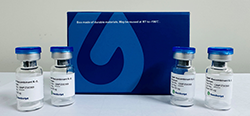
Ni-NTA亲和层析介质(产品编号L00250)是把NTA(氮川三乙酸)共价偶联到4%琼脂糖介质上,再通过NTA的4个结合位点螯合Ni2+制备而成的亲和层析介质。Ni-NTA亲和层析介质的Ni2+脱落率较低,它能耐受蛋白纯化过程中使用的很多添加剂,并且有着较高的蛋白结合能力和稳定性,因此Ni-NTA亲和层析介质非常适用于多组氨酸重组蛋白的纯化。
¥570 在线订购包邮(港澳台除外)
L00250

咨询产品问题
Description

Ni-NTA亲和层析介质(产品编号L00250)是把NTA(氮川三乙酸)共价偶联到4%琼脂糖介质上,再通过NTA的4个结合位点螯合Ni2+制备而成的亲和层析介质。Ni-NTA亲和层析介质的Ni2+脱落率较低,它能耐受蛋白纯化过程中使用的很多添加剂,并且有着较高的蛋白结合能力和稳定性,因此Ni-NTA亲和层析介质非常适用于多组氨酸重组蛋白的纯化。

Key Features 产品特征
基质4%琼脂糖
平均粒径90 μm(45-165 μm)
吸附量≥20 mg 6xHis-tagged 蛋白(27 kDa)
储存溶液含20%乙醇的1×PBS

Ni-NTA亲和层析介质可耐受试剂
变性剂表面活性剂还原剂其他 
6 M 盐酸胍2%Triton X-100 20 mM β-ME4 M MgCl250%甘油
8 M尿素2% Tween 201 mM DTT5 mM CaCl220%乙醇
——1% CHAPS——2 M NaCl  1 mM EDTA

返回

Storage 2-8℃;DO NOT FREEZE
返回

Applications:
1. Purification of polyhistidine-tagged proteins under native conditions.
2. Purification of polyhistidine-tagged proteins from E. coli under denaturing conditions.
返回

High Affinity Ni-NTA Resin

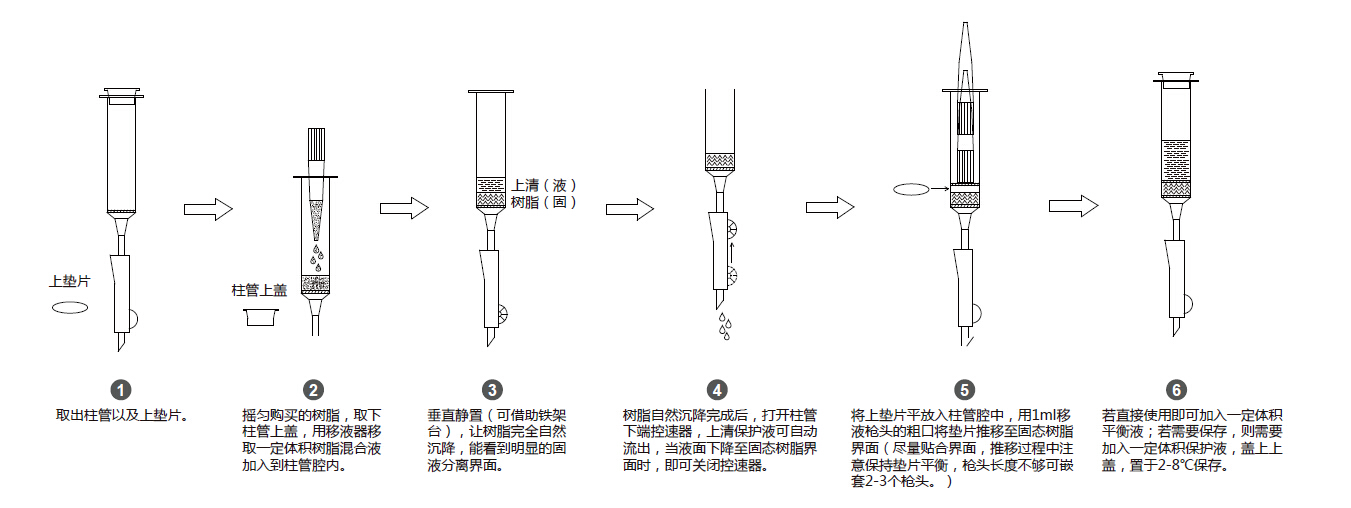
层析柱安装流程示意图 »

<
>

Benjamin E Warner, et al. An Epstein-Barr Virus Nuclear Antigen 1 (EBNA1) Serology Test Strip for Nasopharyngeal Carcinoma Risk Screening. Journal of medical virology. (2026-08)
Jinzhu Chen, et al. Reversible phase dynamics of PsAF5 regulate mitophagy to balance redox levels in Phytophthora sojae. SCIENCE ADVANCES. (2026-01)
Shanhao Jin, et al. Helicobacter hepaticus promotes hepatic steatosis through CdtB-induced mitochondrial stress and lipid metabolism reprogramming. Nature Communications. (2025-08)
Cong Lin, et al. S-ketamine Alleviates Neuroinflammation and Attenuates Lipopolysaccharide-Induced Depression Via Targeting SIRT2. Advanced Science. (2025-04)
Xiao Guo , et al. SARS-CoV-2 specific adaptations in N protein inhibit NF-κB activation and alter pathogenesis. J Cell Biol. (2024-12)
Guilin Wang, et al. Natural SNP Variation in GbOSM1 Promotor Enhances Verticillium Wilt Resistance in Cotton. Advanced Science. (2024-10)
Liang-Qi Sun, et al. OsNLP3 enhances grain weight and reduces grain chalkiness in rice. Plant Commun. (2024-06)
Serges Sabukunze, et al. Comparison of the performance of SAG2, GRA6, and GRA7 for serological diagnosis of infection in cats. Front Vet Sci. (2024-06)
Hongchen Zhang, et al. Shank3 ameliorates neuronal injury after cerebral ischemia/reperfusion via inhibiting oxidative stress and inflammation. Redox Biol. (2023-12)
Wei Chen, et al. An inducible gene from glycoside hydrolase one family of decreases larval survival when feeding on host plant. Front Physiol. (2022-10)
Prakash G Kshirsagar, et al. Characterization of recombinant β subunit of human MUC4 mucin (rMUC4β). Sci Rep. (2021-12)
Meng-Meng Chen, et al. Fungal oxysterol-binding protein-related proteins promote pathogen virulence and activate plant immunity. J Exp Bot. (2021-12)
Zhang Q, et al. Gut Microbiome Directs Hepatocytes to Recruit MDSCs and Promote Cholangiocarcinoma. Cancer Discovery. (2021-05)
Niu Y, et al. A Type I-F Anti-CRISPR Protein Inhibits the CRISPR-Cas Surveillance Complex by ADP-Ribosylation. Molecular Cell. (2020-11)
Jing Tang, et al. GDSL lipase occluded stomatal pore 1 is required for wax biosynthesis and stomatal cuticular ledge formation. New Phytol. (2020-07)
Chen L, et al. Epitope-directed antibody selection by site-specific photocrosslinking. Sci Adv. (2020-04)
Li H, et al. Flavones Produced by Mulberry Flavone Synthase Type I Constitute a Defense Line against the Ultraviolet-B Stress. Plants (Basel, Switzerland). (2020-02)
Liu M, et al. PRMT5-dependent transcriptional repression of c-Myc target genes promotes gastric cancer progression. Theranostics. (2020-01)
ZiyuanHaoXiWangYaxianZongShaoyingWenYanliChengHuogenLi, et al. Enzymatic activity and functional analysis under multiple abiotic stress conditions of a dehydroascorbate reductase gene derived from Liriodendron Chinense. Environmental and Experimental Botany. (2019)
Wang L1, et al. Histone Modifications Regulate Chromatin Compartmentalization by Contributing to a Phase Separation Mechanism. Mol Cell. (2019)
ZhangYumin, et al. Maize VIVIPAROUS1 Interacts with ABA INSENSITIVE5 to Regulate GALACTINOL SYNTHASE2 Expression Controlling Seed Raffinose Accumulation. J. Agric. Food Chem. (2019)
查看更多
返回